
Learning how to make a resume with no work experience can seem difficult, especially when you are applying for your first job. You may wonder what to include, how to describe your skills, or what employers expect from candidates applying for entry-level positions.
The good news is that you do not need a long employment history to create a useful resume. Your education, school projects, volunteer work, certifications, and personal projects can help demonstrate your abilities.
If you are applying for your first job in the United States, this guide will show you how to make a resume with no work experience, choose a suitable format, and highlight your strengths. You’ll also get a ready-to-use resume template, a sample resume, and a helpful checklist to guide you through the application process.
Table of Contents
How to Make a Resume With No Work Experience: 7 Easy Steps
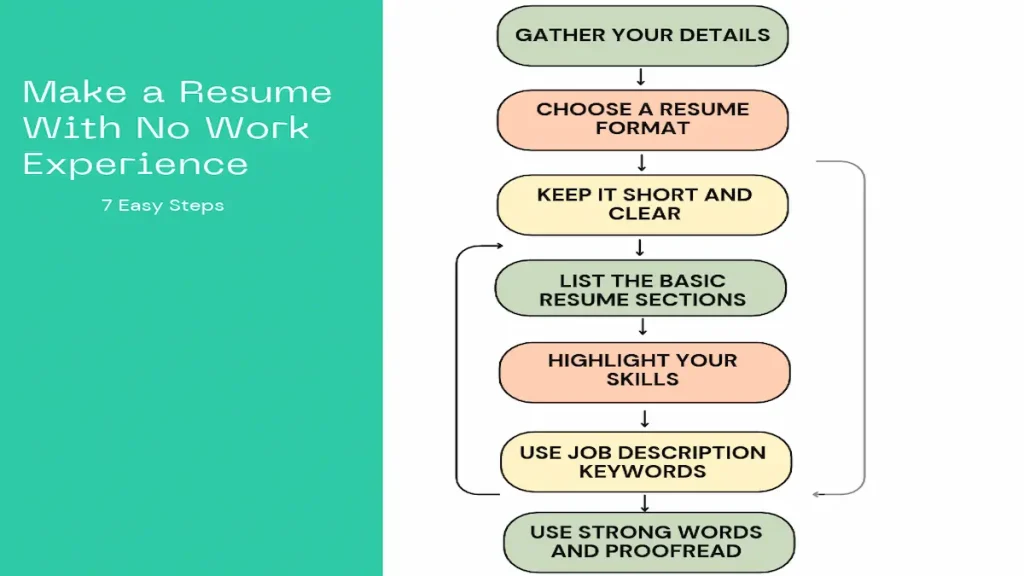
1. Gather Your Details Before Writing Your Resume
Before you start creating your resume in Microsoft Word or Google Docs, collect the important information you want to include. This makes writing easier and helps you identify qualifications you may have overlooked.
Start by listing the following details:
- Contact information: Your full name, phone number, professional email address, and city and state.
- Education: Your school or college, degree or diploma, and graduation date or expected graduation date.
- Skills: Relevant computer programs, technical abilities, communication skills, and other job-related skills.
- Projects: Academic assignments, personal projects, research, or practical work that demonstrates your abilities.
- Volunteer experience: Community service, school events, nonprofit activities, or other unpaid responsibilities.
- Certifications and training: Relevant courses, workshops, and credentials.
- Activities and achievements: Student clubs, competitions, leadership roles, or awards related to the position.
You do not need to include every detail. Focus on information that helps an employer understand why you may be a good fit for the job.
For example, if you are applying for an administrative assistant position, experience organizing documents for a school project may be relevant. If you are applying for a customer service role, helping organize a community event could demonstrate communication and teamwork.
2. Choose a Format That Suits Your Experience
Choosing a resume format that suits your experience helps employers find your qualifications quickly.
For most students and recent graduates, a simple, education-first or combination resume format is a practical starting point. It allows you to highlight skills and education before listing projects or other relevant experience.
A useful section order is:
- Contact information
- Professional summary or resume objective
- Education
- Relevant skills
- Projects, volunteer work, or other experience
- Certifications and additional activities, if relevant
You can change this order depending on your strongest qualifications. For example, if you have completed several relevant projects, place them near the top.
What about an ATS-friendly resume?
Many US employers use applicant tracking systems (ATS) to help manage job applications. A straightforward layout with standard headings can make your resume easier for software and people to process.
To create a readable resume:
- Use a simple, single-column layout.
- Choose a common, readable font such as Arial or Calibri.
- Use simple headings like Education, Skills, and Projects to organize your resume.
- Avoid unnecessary graphics, decorative icons, and complex text boxes.
- Use consistent dates, spacing, and bullet points.
No particular format guarantees that an ATS will read or rank your resume correctly. The employer’s application system and requirements can vary.
Keep your resume clear, well-organized, and easy for employers to scan. Include your contact information, education, relevant skills, and any projects or volunteer work that relate to the job.
When creating your first resume, review the U.S. Department of Labor’s Resume Essentials guide for additional resume-writing guidance.
3. Keep Your Resume Short and Easy to Read
When you have little or no work experience, a one-page resume is usually a sensible target. It provides enough room to highlight your relevant qualifications while keeping your resume clear and focused.
However, do not remove important details simply to meet an arbitrary page count. Some resume guidance permits one or two pages, and an employer may specify a particular limit. Your resume must be two pages or less if that is the stated requirement.
For most people applying for their first job, a one-page resume is sufficient to highlight their education, skills, projects, and relevant activities.
Here are a few ways to keep your resume concise:
- Use short bullet points instead of long paragraphs.
- Remove repeated information.
- Include only relevant skills and activities.
- Use readable text, generally around 10–12 points for body content.
- Keep margins and spacing consistent.
- Leave enough white space to make the page comfortable to read.
Avoid shrinking the font excessively or filling every available space. A clean, relevant resume is more useful than a crowded document.
4. Start by Listing the Basic Sections of Your Resume
Before writing full sentences, create the main sections of your resume. Be sure to include headers that stand out through consistent formatting, clear wording, and appropriate spacing.
Contact Information
Place your full name at the top, followed by your phone number, professional email address, and city and state. You may also add links to your LinkedIn profile, portfolio, or personal website if they are relevant to the position you’re applying for.
For a standard US resume, you generally do not need to include:
- A photograph
- Your date of birth
- Your marital status
- Your Social Security number
- Your full street address
Follow the employer’s application instructions if they request specific information. Do not include sensitive personal information unnecessarily.
Professional Summary or Resume Objective
A professional summary briefly presents your relevant strengths. A resume objective focuses more on the position you want and what you hope to contribute.
If you have no formal work experience, either can work. Choose one and avoid repeating the same information in both.
For example:
Recent high school graduate with basic Microsoft Excel skills, strong organizational abilities, and experience working on academic projects. Seeking an entry-level administrative role where I can apply my data entry skills and help maintain accurate records and organized documents.
Customize this example to match your real skills and the job you want.
Education
List your school or college, qualification, and graduation date or expected graduation date.
You may also include relevant coursework, academic honors, or projects if they help demonstrate knowledge related to the job. Include your GPA only if it strengthens your application or the employer requests it.
Skills
Include specific skills that are useful for the role. Examples may include Microsoft Excel, Google Workspace, written communication, customer service, or basic graphic design.
Avoid vague claims that you cannot support. Instead of listing only “hardworking,” show how you completed a project, met a deadline, or organized information.
Projects and Activities
If you have no formal work history, use this section to describe relevant academic projects, volunteer work, student activities, or personal projects.
Give each entry a clear title and describe what you actually did. This helps employers understand your abilities without confusing unpaid or academic work with paid employment.
5. Highlight Your Skills Instead of Focusing on Your Lack of Experience
One of the most useful tips for writing your resume is to focus on what you can do rather than what you have not done.
Employers hiring for entry-level jobs may consider transferable skills developed through education, volunteering, personal projects, and extracurricular activities.
Examples include:
- Communication: Presenting research, explaining information, or helping coordinate an event.
- Organization: Managing project files, tracking deadlines, or maintaining records.
- Problem-solving: Identifying an issue in a project and finding a practical solution.
- Teamwork: Collaborating with classmates or volunteers to complete a shared task.
- Technical skills: Using software, creating spreadsheets, editing documents, or completing a coding project.
The key is to provide evidence.
Instead of writing:
“Excellent communication and teamwork skills.”
Write:
“Collaborated with three classmates to prepare a research presentation and explain the findings to the class.”
The second example shows how you used your skills. Only include details that accurately reflect your experience.
How to describe a project on your resume
A useful bullet point explains the action you took, the skill you used, and the result when you can support it.
For example:
Weak: Worked on a school project.
Stronger: Researched a topic, organized findings in a spreadsheet, and prepared a presentation with two classmates.
You do not need professional experience to write specific, meaningful bullet points. You need an honest example of something you have done.
6. Pull Keywords From the Job Description
Example of relevant skills highlighted in a job description.
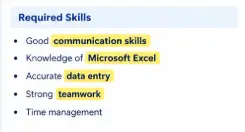
Review the job description carefully before sending your resume to make sure it matches the employer’s requirements. Employers often identify the skills, qualifications, tools, and responsibilities they want candidates to have.
These details help you decide which parts of your background deserve the most attention. For more tips, read Indeed’s guide on how to tailor your resume to a job description.
Follow these steps:
- Read the entire job posting.
- Identify the required skills, qualifications, and software.
- Compare the requirements with your actual abilities.
- Include relevant keywords naturally in your summary, skills, education, and project descriptions.
- Remove details that do not support your application.
For example, suppose a US entry-level data entry job mentions Microsoft Excel, accuracy, and record management.
If you have genuinely practiced these skills in a school project, you might write:
“Organized spreadsheet records using Microsoft Excel and checked entries for accuracy as part of an academic project.”
This statement uses relevant job-related language while clearly describing the context.
Do not copy the entire job description into your resume or claim experience you do not have. Keywords should describe your real qualifications, not make your resume appear more experienced than you are.
Remember: Customize your resume for each job when necessary. A resume prepared for a retail position may need different skills and examples from one prepared for an administrative assistant position.
7. Use Strong Language and Proofread Your Resume
The words you choose can make a difference in how clearly employers understand your experience.
Start bullet points with specific action verbs, such as:
- Organized
- Created
- Prepared
- Researched
- Analyzed
- Developed
- Presented
- Coordinated
- Assisted
- Managed
You can also start your professional summary with a suitable descriptive adjective, such as “Motivated,” “Organized,” or “Detail-oriented.” Choose an adjective that genuinely describes you and support it with relevant evidence whenever possible.
Compare these examples:
Weak: Responsible for a college assignment.
Stronger: Organized research notes, checked information for accuracy, and prepared a written report for a class assignment.
The stronger version explains the work rather than relying on a general statement.
Before sending your resume, review this checklist:
- Your contact information is correct.
- Your grammar, spelling, and punctuation are accurate.
- Your section headings stand out clearly.
- Your skills and experience relate to the job.
- Your dates and formatting are consistent.
- You have not invented experience, results, or qualifications.
- Your resume is easy to read on a computer screen.
- Your filename is professional, such as Jordan_Lee_Resume.pdf.
- Follow the employer’s instructions for the required file format and application submission.
Save your resume in the format requested by the employer. If a PDF is accepted, open the saved file to check that the formatting has not shifted.
What to Put on a Resume With No Work Experience
If you are unsure what belongs on your first resume, use the following checklist to identify the sections that fit your background.
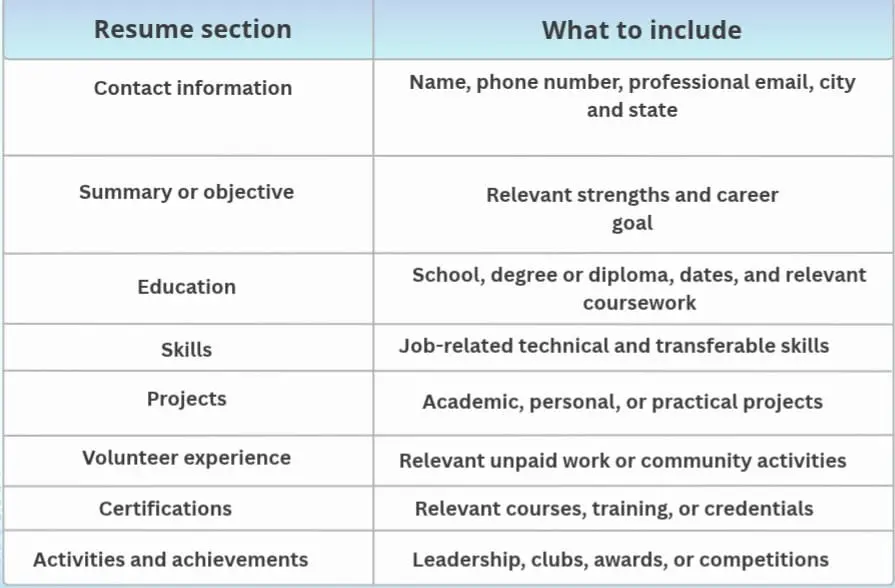
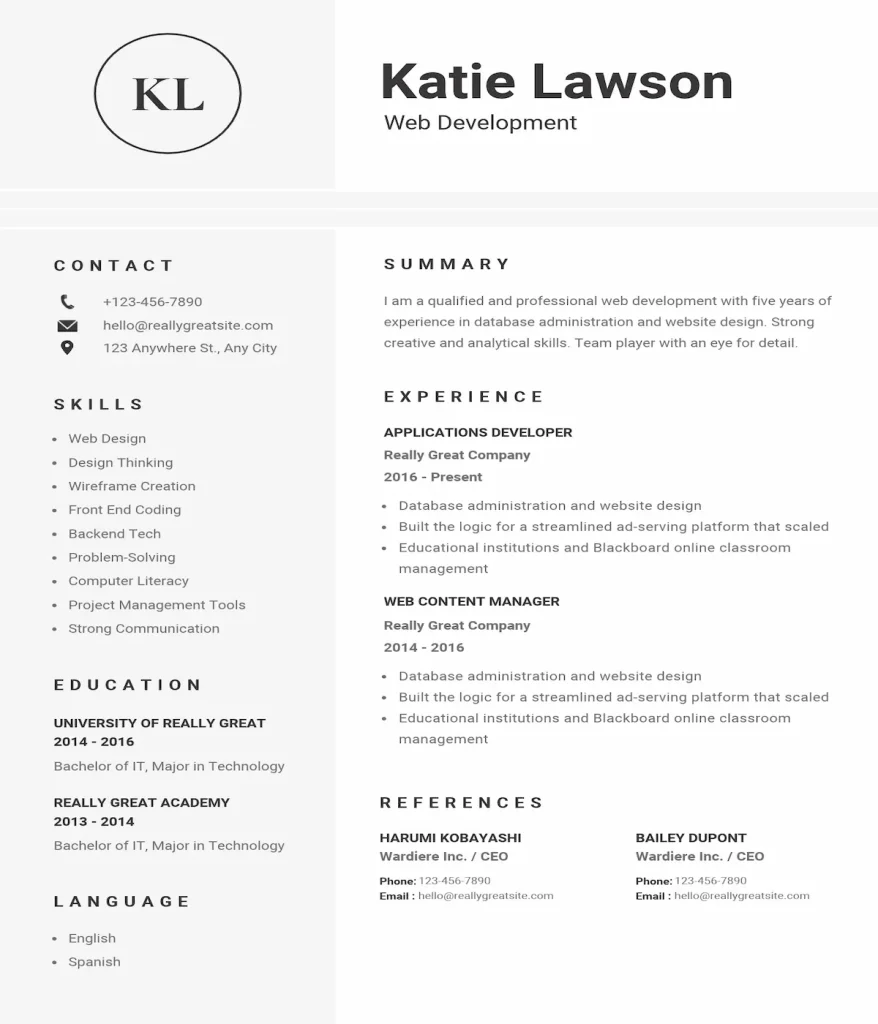
You do not need every section. If you have no certifications or volunteer experience, leave those sections out.
If you have never held a paid job, think about school presentations, group projects, personal websites, coding exercises, or other activities that demonstrate relevant skills. Include them only when they add value to the application.
The goal is to present useful evidence of your abilities, not to fill the page with unrelated information.
Resume With No Work Experience Template
Use this resume with no work experience template as a starting point. Copy it into Microsoft Word or Google Docs, replace the placeholders with your own details, and remove any sections that do not apply.
Download the free resume template:
Replace the sample information with your own details before submitting your resume.
[YOUR FULL NAME]
[City, State] | [Phone Number] | [Professional Email Address] | [LinkedIn or Portfolio, if relevant]
Professional Summary
Motivated [student or recent graduate] with knowledge of [relevant skill 1] and [relevant skill 2]. Seeking an entry-level [job title] position where I can apply my abilities, contribute to the team, and continue developing my skills.
Education
[Degree or Qualification]
[School or College Name], [City, State]
[Graduation Date or Expected Graduation Date]
Relevant coursework: [Add relevant courses if useful]
Skills
- [Relevant technical skill]
- [Software or computer skill]
- [Communication or organizational skill]
- [Other job-related skill]
Projects
[Project Name] | [Month Year]
- [Describe what you created, researched, organized, or completed.]
- [Explain which tools or skills you used.]
- [Add a specific result if you can verify it.]
Volunteer Experience or Activities
[Position or Activity] | [Organization or Group] | [Month Year – Month Year]
- [Describe your contribution and the skills you demonstrated.]
Certifications and Training
- [Course or Certificate Name] — [Provider], [Year]
Include only sections and details that apply to you. Do not invent experience, qualifications, or results to complete the template.
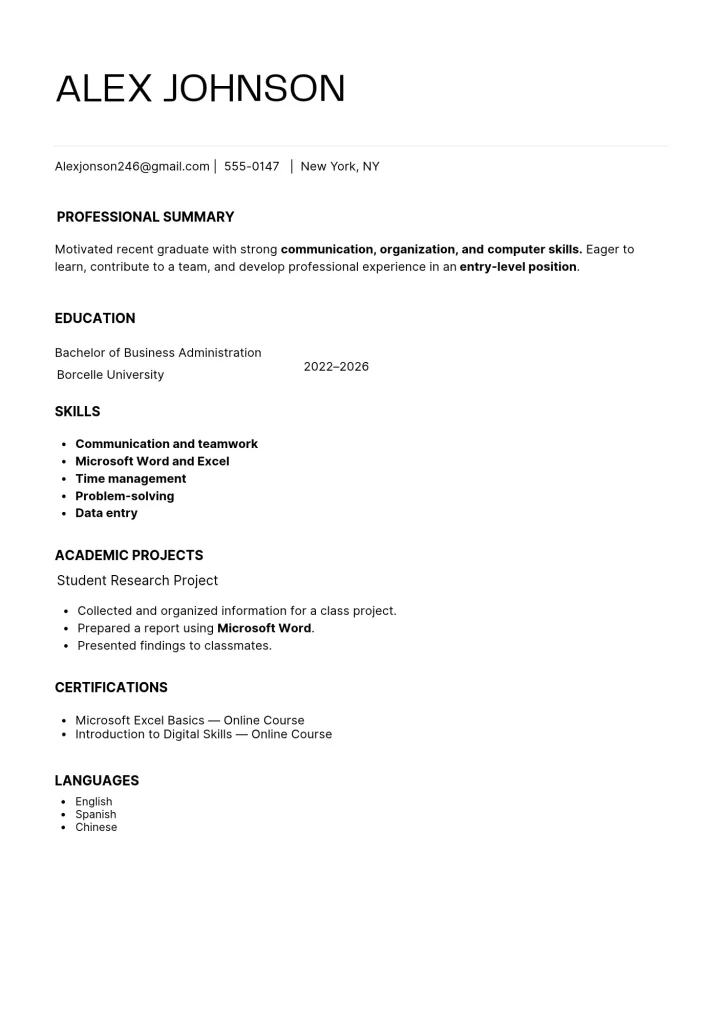
Example: A Resume for a First-Time Job Applicant in the USA
The following fictional example shows how a recent high school graduate might organize a resume for an entry-level administrative assistant position in the United States.
Jordan Lee
Austin, TX | 512-555-0147 | jordan.lee@example.com
Professional Summary
Motivated high school graduate with basic Microsoft Excel skills and experience organizing information for academic projects. Interested in an entry-level administrative assistant position where accuracy, organization, and a willingness to learn can support daily office tasks.
Education
High School Diploma
Example High School, Austin, TX
Graduated: May 2026
Skills
- Microsoft Word and basic Excel
- Spreadsheet organization
- Document formatting
- Written communication
- Attention to detail
Academic Project
Student Survey Report | April 2026
- Organized survey responses for a class assignment using a spreadsheet.
- Checked entries for consistency and prepared a summary of the findings.
- Collaborated with classmates to complete the report by the deadline.
Activities
School Event Volunteer | March 2026
- Helped organize materials for a school event.
- Assisted with directing participants and keeping materials organized.
This example demonstrates how education, projects, and activities can fill a resume without pretending to show formal employment history. The details are fictional and should not be copied as personal achievements.
Common Resume Mistakes to Avoid When You Have No Work Experience
When writing your first resume, watch out for these mistakes:
- Inventing experience: Never add a job, certification, or achievement you did not earn.
- Using the same resume for every position: Adjust relevant skills and examples to the role.
- Writing long paragraphs: Use concise descriptions and readable bullet points.
- Listing unsupported skills: Include abilities you can explain or demonstrate.
- Using a complicated design: Keep the layout simple and consistent.
- Adding unnecessary personal details: Follow US resume conventions and the employer’s instructions.
- Ignoring the job description: Highlight the qualifications and skills that best match the employer’s requirements.
- Forcing a second page: Keep your resume concise when one page is sufficient.
A strong first resume does not need to look complicated. It needs to communicate your genuine qualifications clearly.
Related Guide: If you want to learn the difference between a CV and a resume, read our complete guide.
Frequently Asked Questions
1. Can I make a resume without any work experience?
Yes. You can use your education, relevant skills, academic projects, volunteer activities, certifications, and other genuine achievements. Focus on examples that demonstrate abilities related to the position.
2. How long should a resume with no work experience be?
For most students and first-time job seekers, one page is a practical target. A longer resume may be appropriate when you have meaningful additional qualifications and the employer’s instructions allow it.
3. What should I write if I have no experience for a resume?
Start with your education and relevant skills. Add school projects, personal projects, volunteer work, or activities that demonstrate responsibility and initiative. Describe what you actually did instead of repeatedly stating that you have no experience.
4. Should I include a resume objective if I have no work experience?
A short objective can explain the position you want and the skills you bring. A professional summary can also work. Choose one that adds useful information without repeating the same statements.
5. Which resume format is best for beginners?
An education-first or combination format is a practical choice for many students and recent graduates. The best format depends on your background, the job requirements, and which qualifications are most relevant.
6. Should I include a photo on a US resume?
A photo is generally unnecessary on a standard US resume. Focus on relevant qualifications, skills, education, and experience instead. Always follow any specific application instructions.
7. How can I make my resume stand out without experience?
Use specific examples, highlight relevant projects, tailor your resume to the job description, and keep the formatting clear. Avoid generic claims that are not supported by evidence.
8. Should I save my resume as a PDF?
Follow the employer’s instructions first. If PDF is accepted, it is often a practical option because it preserves the document’s layout. Check that the saved file is readable and correctly formatted before submitting it.
9. How to Make a Good Resume With No Work Experience?
Use a simple format, highlight your skills and education, include relevant projects, and tailor your resume to the job description.
10. How to Write a Resume?
To write a resume, add your contact information, professional summary, education, relevant skills, and any projects or volunteer experience. Use a clear format, tailor your resume to the job description, and proofread it before submitting.
Final Thoughts
Learning how to make a resume with no work experience becomes easier when you highlight your existing skills, education, and achievements. Education, academic projects, volunteer activities, and personal projects can help demonstrate your potential to a US employer.
Start by gathering your details, choose a format that suits your experience, and highlight the qualifications that match the job. Use the template as a starting point, keep the information accurate, and proofread the finished document before applying.
You do not need to pretend to have professional experience you lack. Your first resume should show employers what you can genuinely offer and how you are prepared to contribute and learn.
Pingback: What Is a CV vs Resume? 4 Easy Differences Explained